Dubai Metro Blue Line is taking shape: what does this mean for the city?
Dubai is known worldwide for its impressive skyline and ambitious real estate projects. Less visible, but just as important, are the investments the city is making in its infrastructure. No matter how attractive new residential and business districts may be, good connections ultimately determine how well a city functions.
The Dubai Metro Blue Line is a good example. Over the past period, new details have been announced about the route, stations and design of the project. This is providing an increasingly clear picture of what the metro will look like from 2029 onwards and which parts of Dubai will become better connected.
For residents, this means more travel options and shorter journey times. For the real estate market, it is another development that shows Dubai’s continued investment in the city’s growth.
The largest expansion of the Dubai Metro since 2011
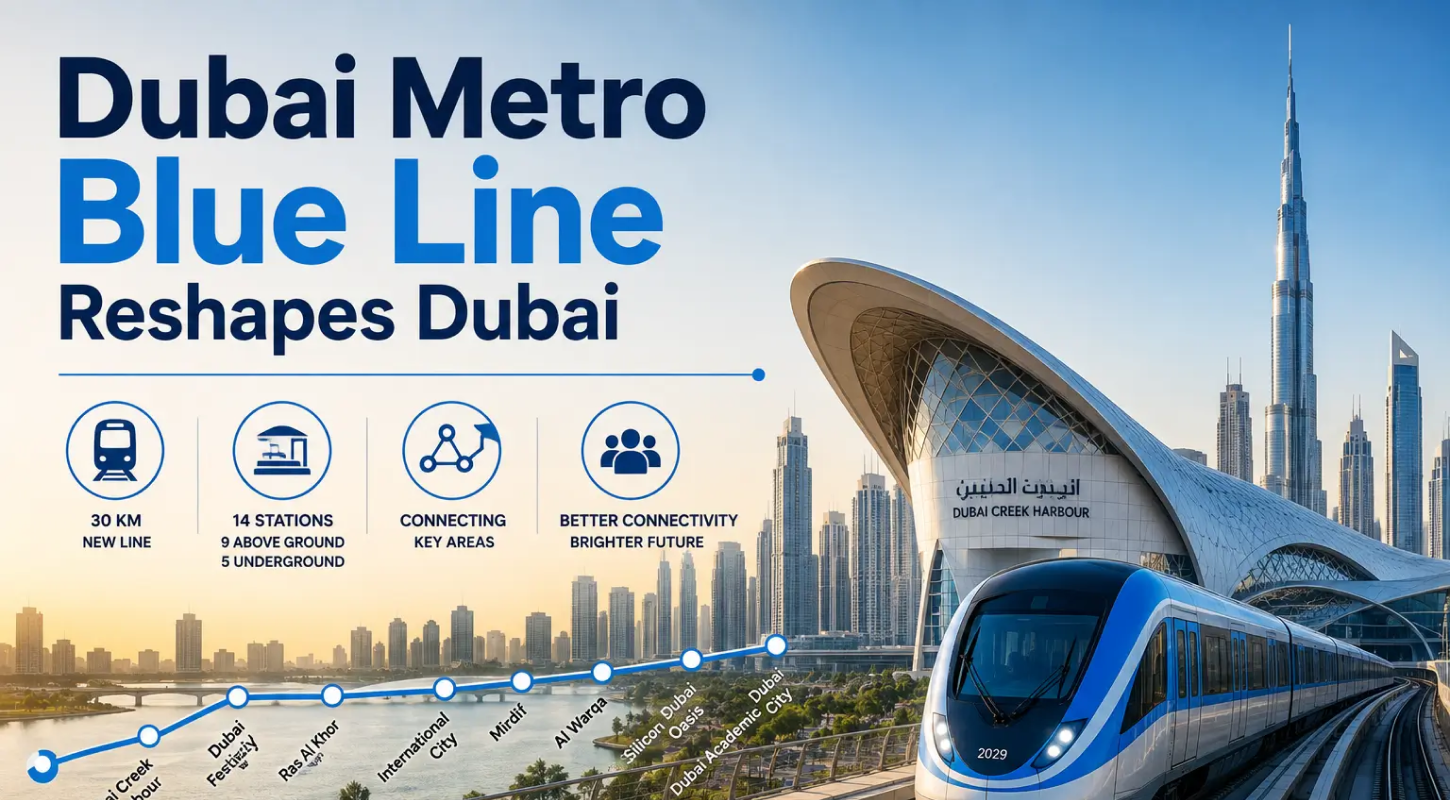
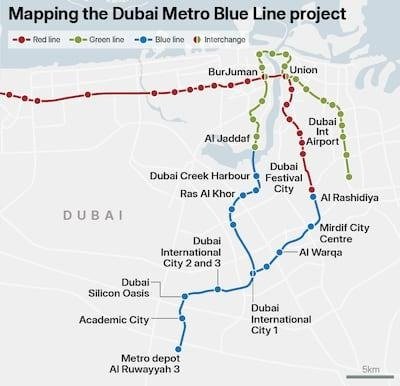
The Blue Line will be the largest expansion of the metro network since the opening of the Green Line. The new line will be approximately 30 kilometres long and will consist of 14 stations, nine above ground and five underground.
The line will also connect to both the Red Line and the Green Line, making it easier for passengers to transfer between lines and allowing a larger part of the city to be reached by metro.
According to the current schedule, the Blue Line is set to open on 9 September 2029, exactly twenty years after the first Dubai Metro became operational.
Which areas will benefit from the Blue Line?
The new metro line will connect several areas that have developed significantly in recent years or where substantial further development is planned in the years ahead.
The route will include:
- Dubai Creek Harbour
- Dubai Festival City
- Ras Al Khor
- International City
- Mirdif
- Al Warqa
- Dubai Silicon Oasis
- Dubai Academic City
This combination is precisely what makes the Blue Line interesting. It will not only serve established residential areas, but also locations where many new homes, offices, educational institutions and amenities are expected to be developed in the coming years.
Dubai Creek Harbour is getting an iconic metro station
One of the most striking elements of the project is the new station in Dubai Creek Harbour. The station was designed by Skidmore, Owings & Merrill (SOM), the architecture firm behind the Burj Khalifa. At approximately 74 metres high, it is expected to become the tallest metro station in the world.
This reflects the way Dubai approaches major infrastructure projects. Functionality naturally plays an important role, but considerable attention is also given to architecture and appearance. The station is intended not only to accommodate passengers, but also to become a new landmark within the city.
The Blue Line is part of a bigger plan
The Blue Line is not the only infrastructure project Dubai is currently working on.
Earlier this year, the introductory phase of Etihad Rail was announced, while the first plans for the future Dubai Metro Gold Line have also been revealed. In the future, this line is expected to connect areas including Business Bay, Meydan and Jumeirah Golf Estates and link them to the existing metro network.
Together, these projects show that Dubai is not only continuing to invest in new real estate developments, but also in the infrastructure needed to support the city over the coming decades.
Why do we follow developments like these?
We look beyond new project launches alone. Infrastructure is often an important factor in the development of a city. New metro connections improve accessibility, support the growth of new residential areas and help different parts of Dubai become better connected.
This does not mean that the arrival of a metro station automatically leads to higher property prices. The real estate market is influenced by many other factors. However, projects like these provide a useful indication of where the government is investing in the years ahead and which areas are expected to play an important role in the city’s continued development.
That is exactly why we follow these developments closely. Not only because they are relevant to residents, but also because they provide valuable insights into the future of Dubai’s real estate market.
Sources
· Gulf News. (2026). Dubai Metro Blue Line and Gold Line: Routes and Station Locations Explained.
· Time Out Dubai. (2026). Dubai Metro Blue Line: Here’s Where the 14 New Stations Will Be Located.
· Roads and Transport Authority (RTA), Dubai. Dubai Metro Blue Line Project. (Official project information.)