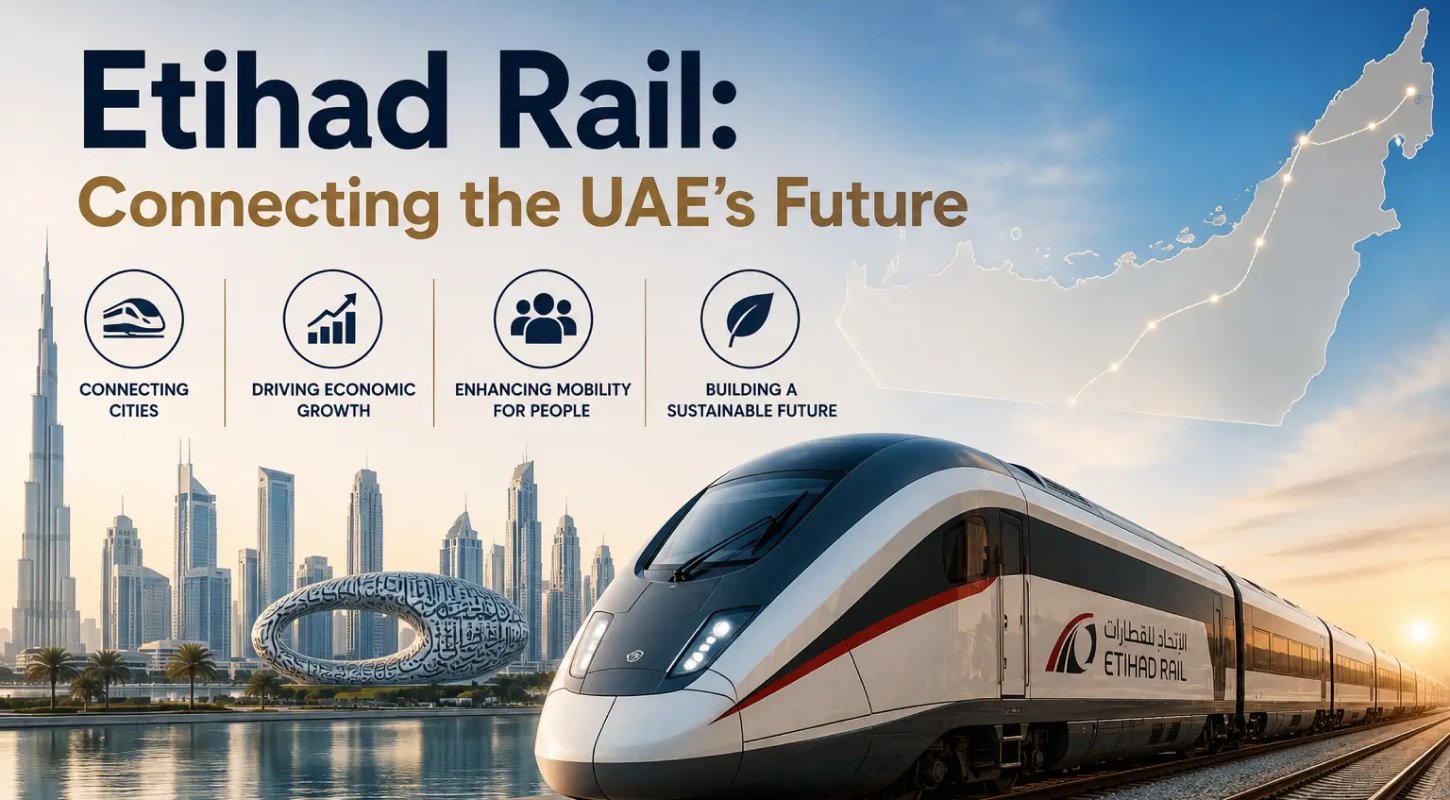
Etihad Rail officially launches: what does this mean for the future of the UAE?
The United Arab Emirates is known worldwide for its impressive skyline and ambitious real estate developments. But behind this visible growth lies something equally important: the infrastructure that connects cities, businesses and people.
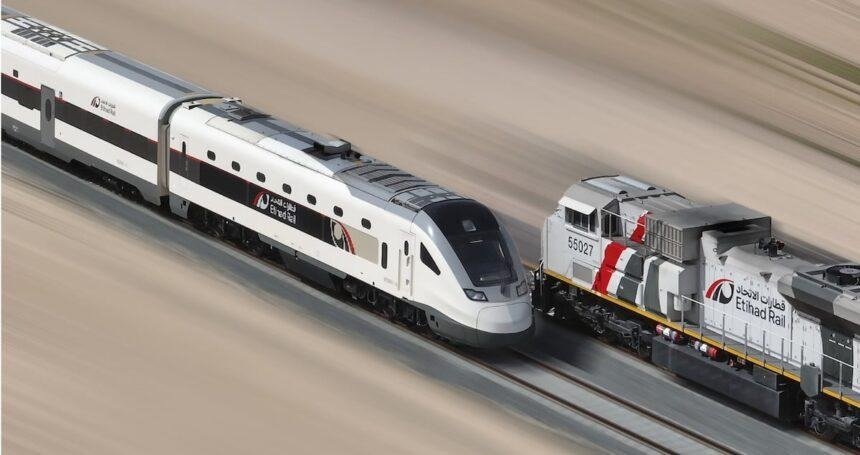
With the launch of Etihad Rail’s first passenger service on 30 June 2026, the UAE is taking another important step in its development. The first train operates between Abu Dhabi and Fujairah, covering the journey in approximately 1 hour and 45 minutes. For the first time, the country now has a national intercity rail connection for passengers.
What is Etihad Rail?
Etihad Rail is the developer and operator of the United Arab Emirates’ national railway network. The project was established to improve connectivity between the seven emirates and forms an important part of the UAE’s long-term vision for economic growth, logistics and sustainable mobility.
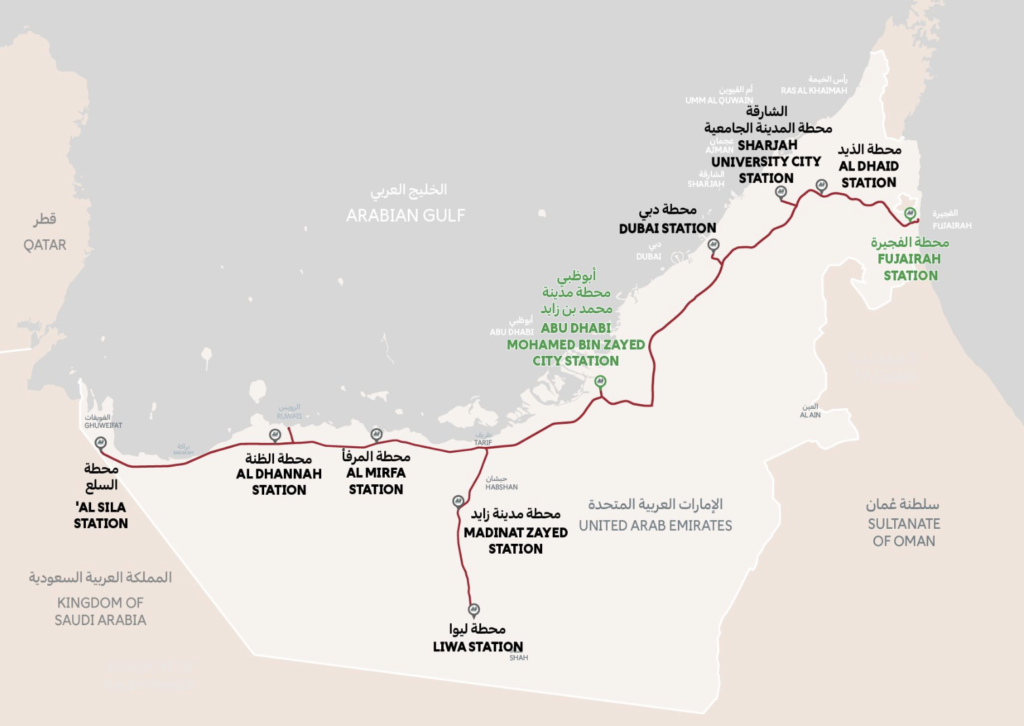
The network spans more than 900 kilometres and connects major cities, ports, industrial areas and logistics hubs across the country. Until now, the railway has primarily been used for freight transport. The introduction of passenger services marks a new chapter in the development of the network.
The first passenger connection is just the beginning
The introductory route between Abu Dhabi and Fujairah is the first phase of a much larger passenger network.
According to the current schedule, the expansion will take place in several phases:
- 30 June 2026 – Introductory phase between Abu Dhabi and Fujairah.
- 30 September 2026 – Official nationwide launch, including the opening of stations in Dubai (Jumeirah Golf Estates) and Al Dhaid.
- 30 December 2026 – Expansion to stations in Al Dhafra.
- 30 March 2027 – Opening of the station in Sharjah, adding another important connection to the network.
Ultimately, Etihad Rail is expected to connect 11 cities and regions across the UAE. This will create, for the first time, a nationwide passenger rail network that allows residents and visitors to travel more easily between the different emirates.
Why is the UAE investing so heavily in rail infrastructure?
Over the past twenty years, the UAE has developed into an international hub for trade, tourism and entrepreneurship.
That growth requires more than new residential communities, offices and airports. As cities expand and the population grows, well-connected infrastructure becomes increasingly important. Etihad Rail therefore forms part of a broader strategy to:
- Improve connectivity between the emirates;
- Better connect the country’s economic centres;
- Further strengthen the UAE’s position as a logistics hub;
- Provide travellers with an alternative to travelling by car;
- Support the country’s future growth.
The project is therefore closely aligned with the UAE’s broader ambition to invest in sustainable economic development and high-quality infrastructure.
What does this mean for Dubai?
Although the first passenger service does not yet run through Dubai, the city is set to gain an important position within the national network later this year.
With the opening of the station at Jumeirah Golf Estates, Dubai will be connected to Etihad Rail. Over time, this will provide direct connections to Abu Dhabi, Fujairah, Sharjah and other parts of the UAE.
This fits into Dubai’s wider development strategy.
The city is not only investing in new residential communities, hotels and commercial developments, but also in the infrastructure needed to support this growth. This includes the expansion of the Dubai Metro, new roads and airports, and now a connection to the national railway network.
More than just a train connection
Etihad Rail is more than simply a new way to travel from A to B. The project connects cities, supports economic growth and forms part of a broader vision in which the different emirates become increasingly interconnected.
For residents, this means more mobility options. For businesses, it creates more efficient connections between economic centres. For tourists, it will become easier to visit multiple emirates during a single trip.
For the real estate market, it once again highlights the UAE’s continued investment in the infrastructure needed to support future growth. Projects such as Etihad Rail demonstrate how the United Arab Emirates continues to invest in accessibility, economic development and stronger connections between the emirates.
It is precisely this combination of real estate, infrastructure and long-term vision that makes the UAE one of the most dynamic real estate markets in the world.
Sources
Etihad Rail. (n.d.). Passenger. Accessed 13 July 2026.
Khaleej Times. (2026). Etihad Rail to begin introductory phase of passenger train services on June 30. Accessed 13 July 2026.
Time Out Dubai. (2026). Etihad Rail: Confirmed station locations and launch dates. Accessed 13 July 2026.